In September 2022 we booked a trip to the Klahoose Wilderness Resort. Covid had kept us anchored at home for a few years and we wanted an escape. We decided that local was best – no long, tiring travel, no airports, less carbon burned, and a wilderness experience fairly close to home.
We were drawn to Klahoose by its spectacular wilderness setting and the promise of watching grizzly bears feeding on returning salmon at the head of Toba Inlet. We were also intrigued that the resort is fully owned and operated by the Klahoose. The salmon were running and we were anticipating a genuine BC experience.
Klahoose is accessible only by float-plane and boat. But first we had to drive from Burnaby to Lund, where we would board the resort’s boat to take us to Homfray Channel and the lodge. To get to Lund we had to travel the full length of the Sunshine Coast including two ferry crossings. The first departed from Horseshoe Bay to Gibsons (Langdale).
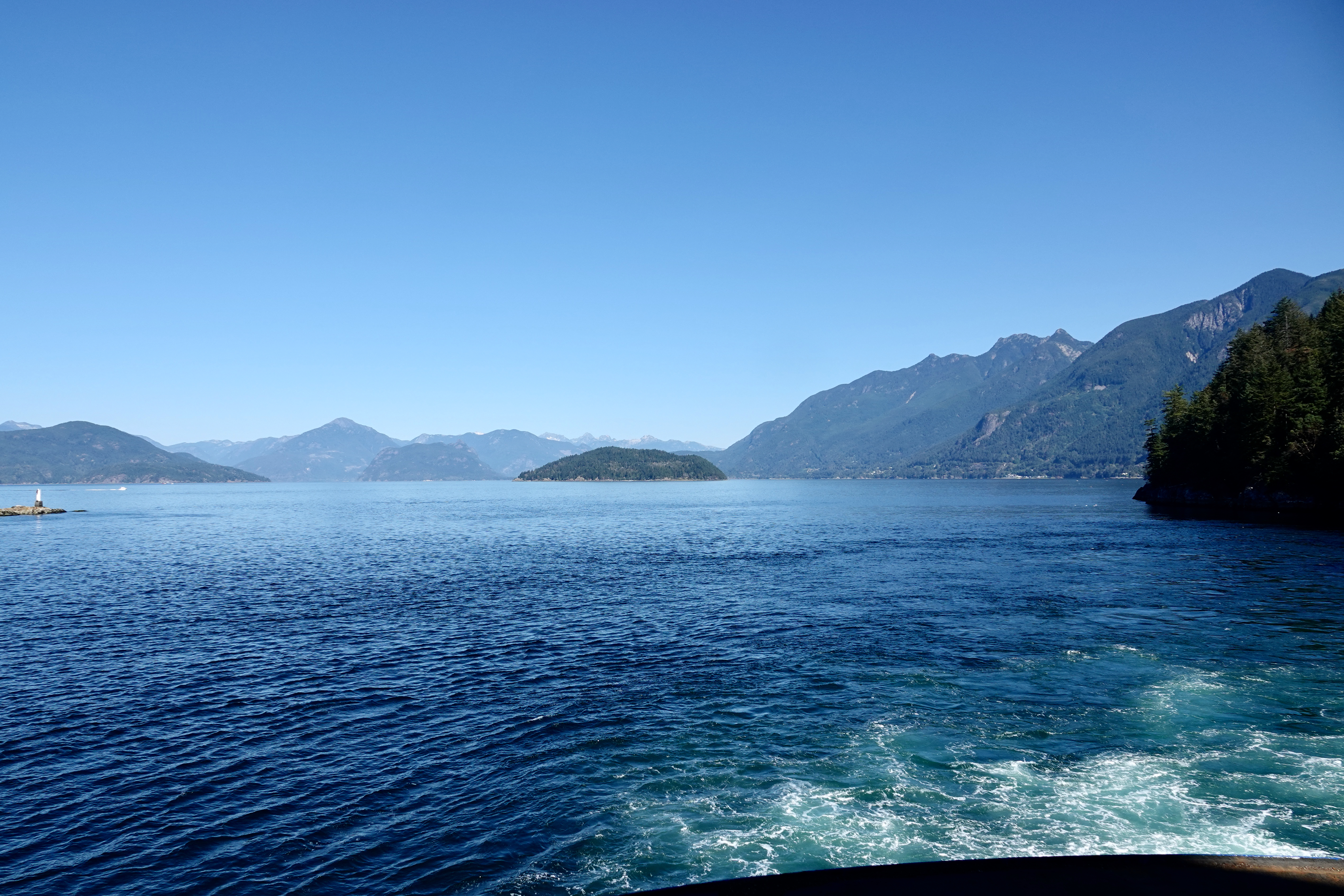
For a trip focused on viewing wildlife, the pod of orcas we saw close to Bowen Island, just a few minutes out of the Horseshoe Bay ferry dock, was a good omen for the rest of the trip.
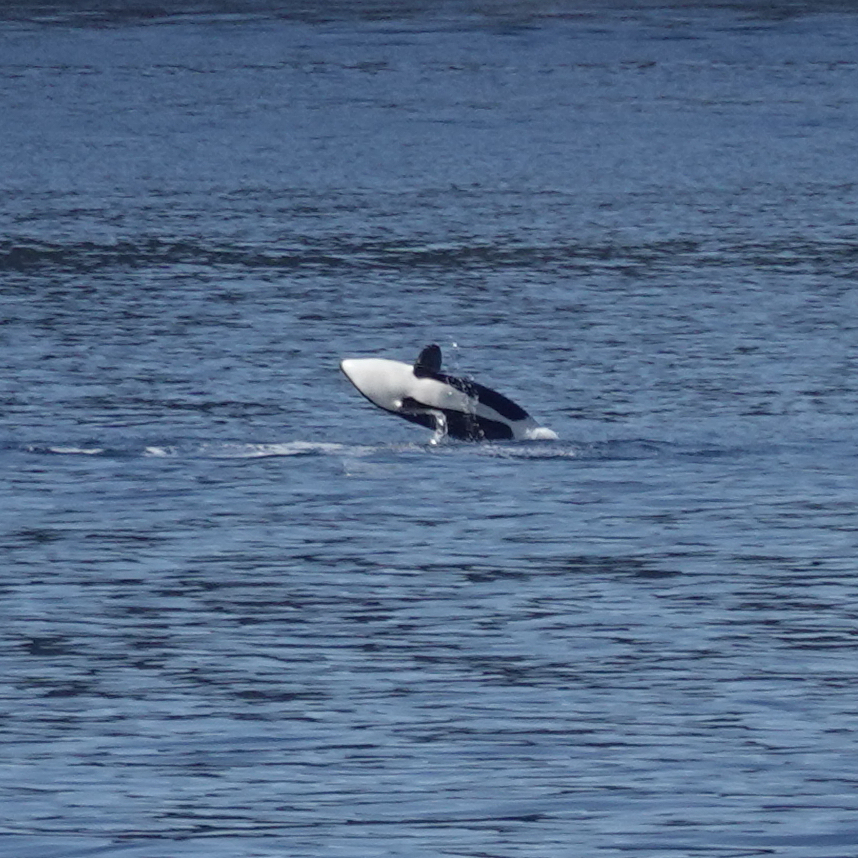

The views were distant, but the orcas were likely “transients” moving into Howe Sound looking for seals, their main prey. However, for the time we were watching them, the pod had ditched hunting and switched into play mode.
–––––––––––––––––––––––––––––
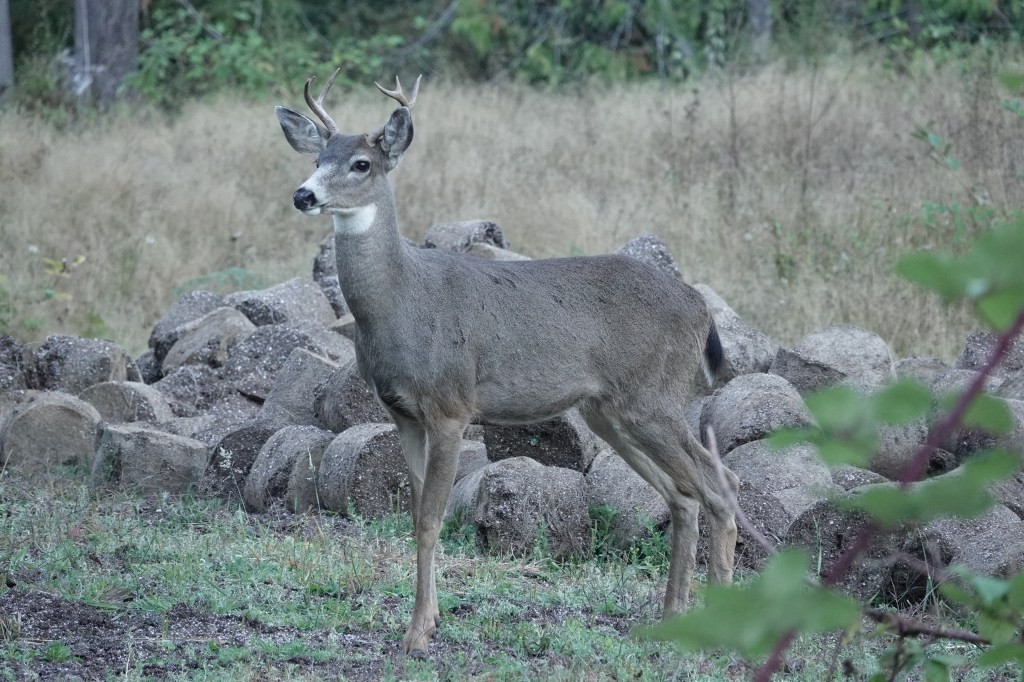
Not being in a hurry, we spent our first night near Madeira Park. After eating some dinner in our motel room I took a walk at dusk hoping for some late-day bird activity. The birds were quiet, but instead, and in keeping with the wildlife theme of the trip, I was surprised by this close encounter with a mule deer.
It wasn’t quite rutting season yet, but bucks can be unpredictable if mating hormones are working their magic, and I had no way to know how charged-up this one might have been. Yes, the young buck had small antlers, but they would be enough to inflict some serious damage to my fleeing ass end. So I was cautious, didn’t get too close, and did my best not to look like another buck.

Next morning we headed to the ferry from Earl’s Cove to Saltery Bay to complete the final leg of our drive, arriving in Lund in plenty of time for a relaxing lunch at Nancy’s Bakery, and to get ready for our sea travel to Klahoose.

We finished lunch and, together with the other eight guests, got ourselves down to the dock ready to board our transportation to the resort for our three night stay.
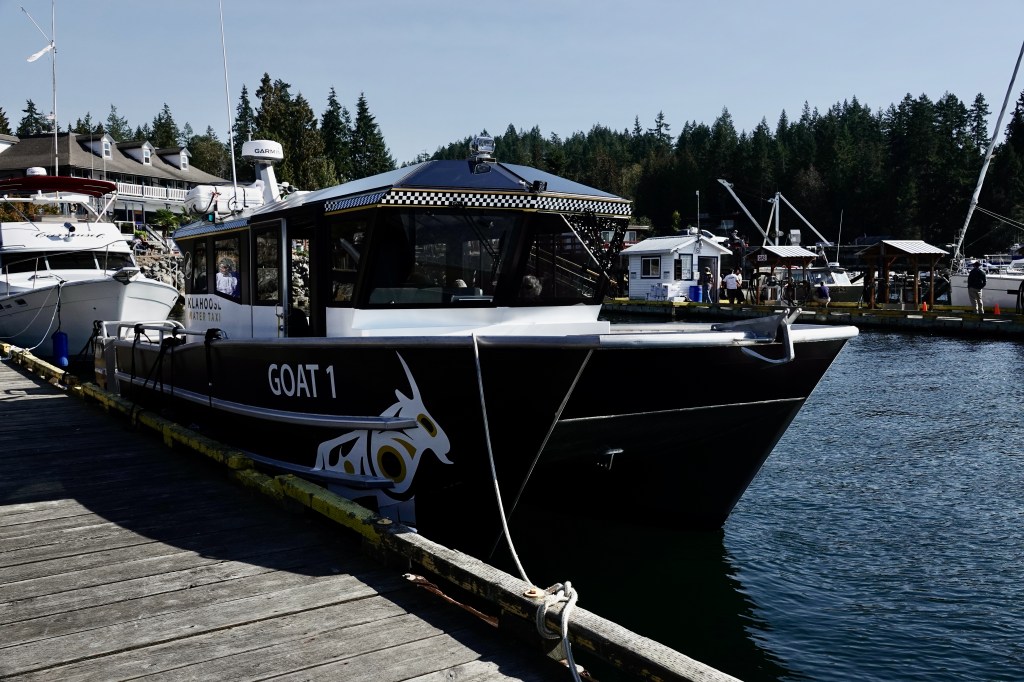
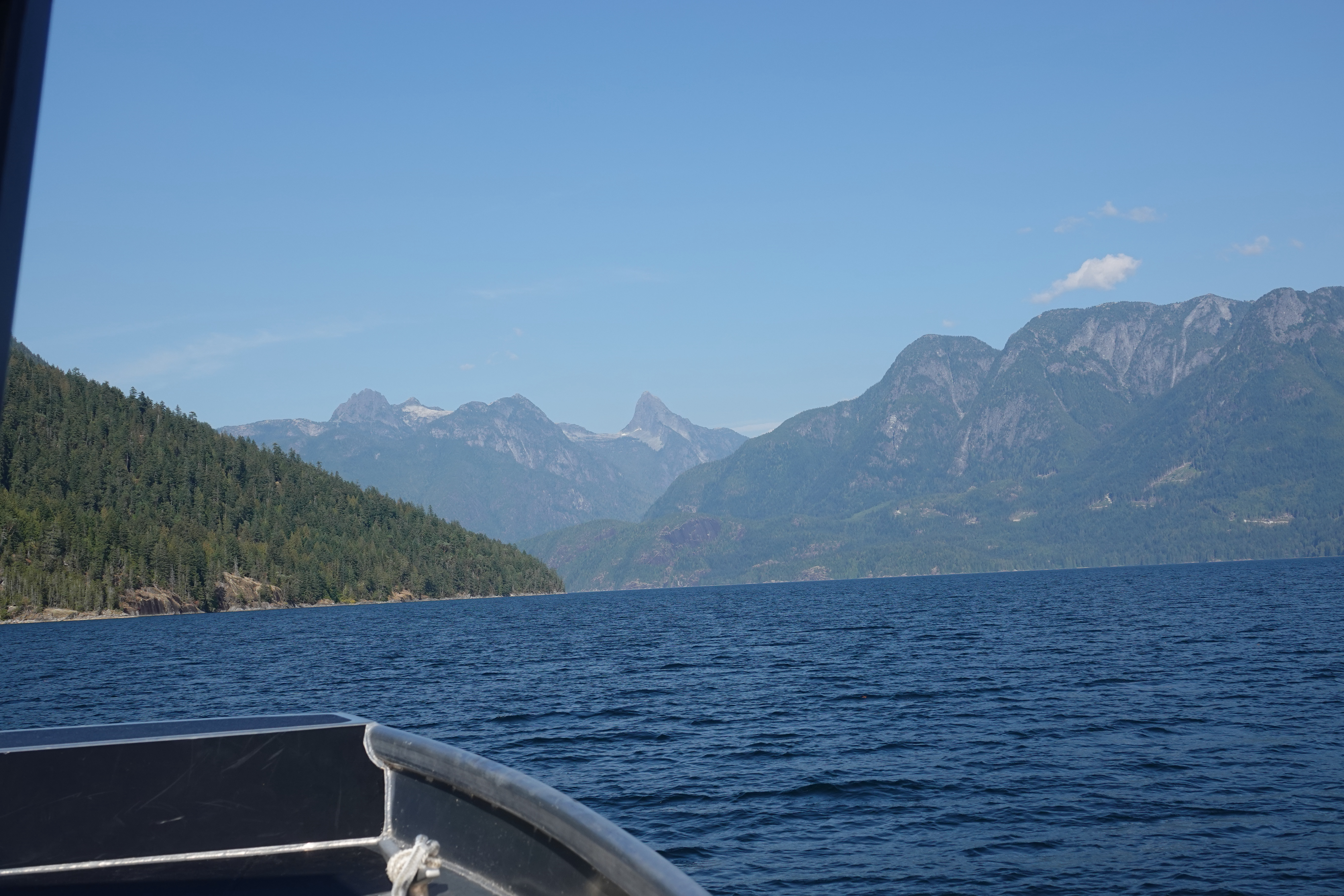
Every seat in the boat gave great views for our journey up to Homfray Channel. The vessel’s name and logo come from the mountain goats that live on the mountains around the lodge.
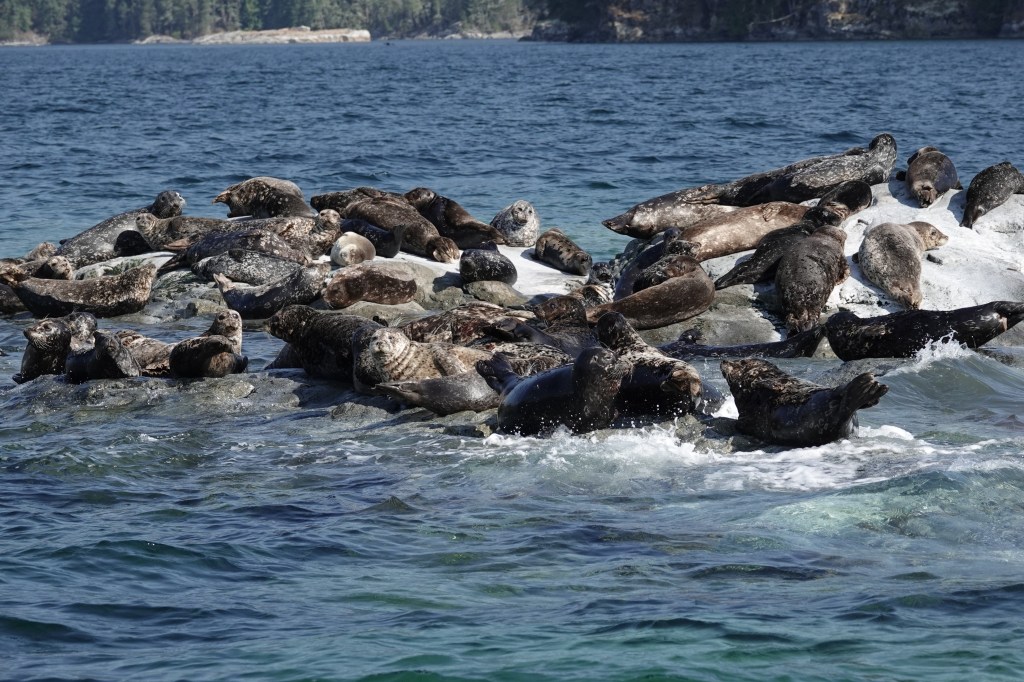
We took a brief pause travelling up the channel to enjoy close views of harbour seals sunning on a rocky shoal. Habituated to regular visits from Goat 1, they were undisturbed by us. However, it would likely have been panic time if a pod of transient orcas, like the ones we saw the day before, had showed up.
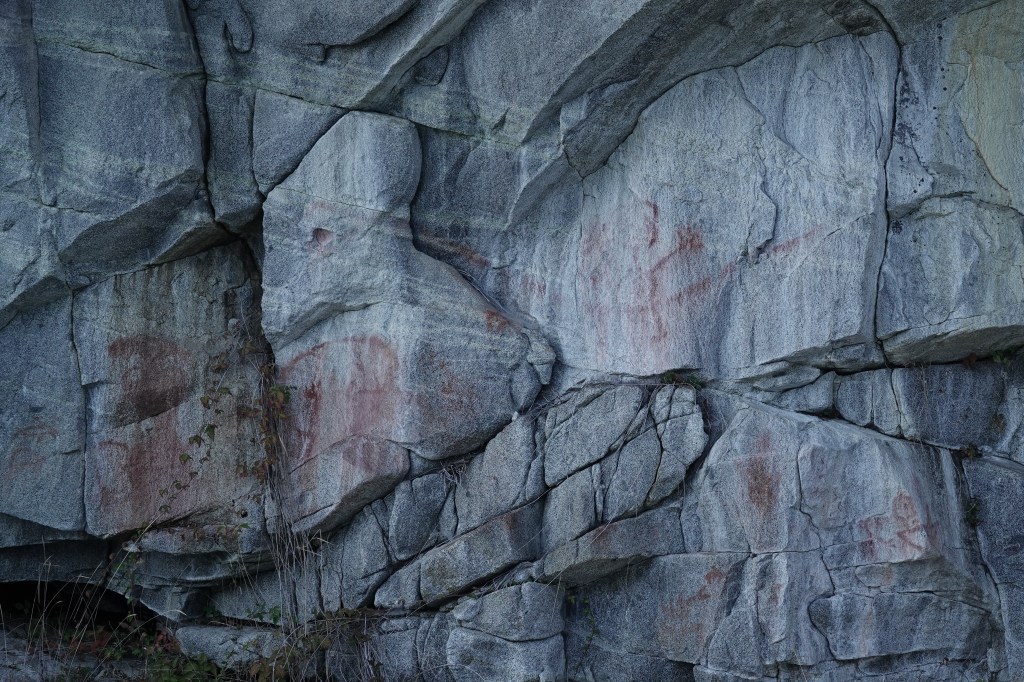
At another stop heading up the channel we viewed pictographs sheltered under an overhang on the steep rocky walls of the channel. Done by unknown First Nations, they conveyed messages also no longer known.
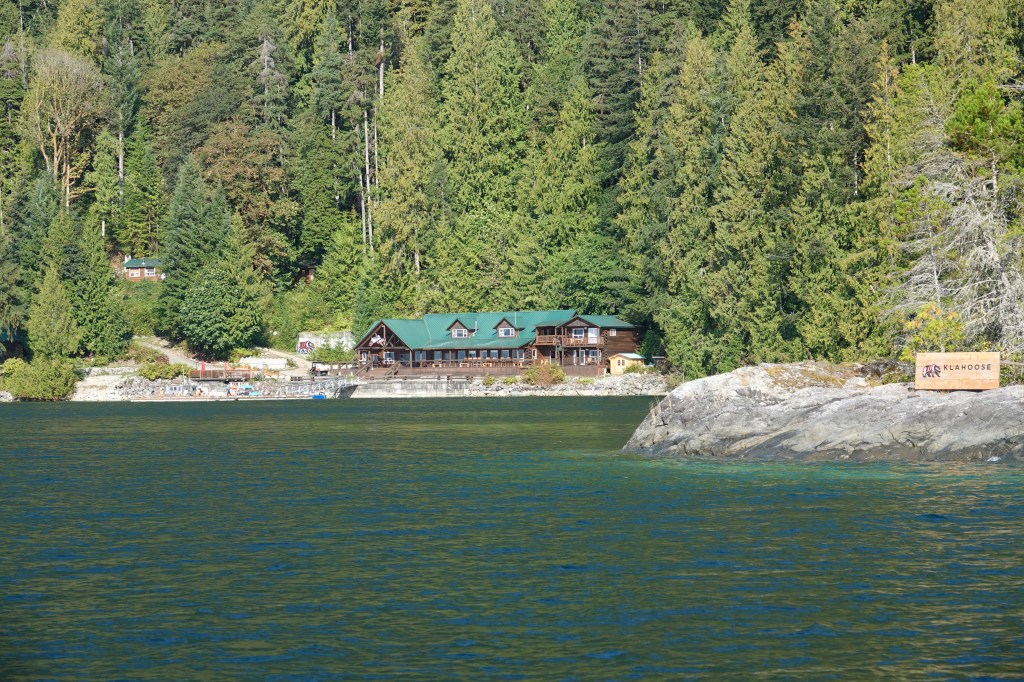
After about an hour motoring along at a good clip in Goat 1, we approached the Klahoose Resort
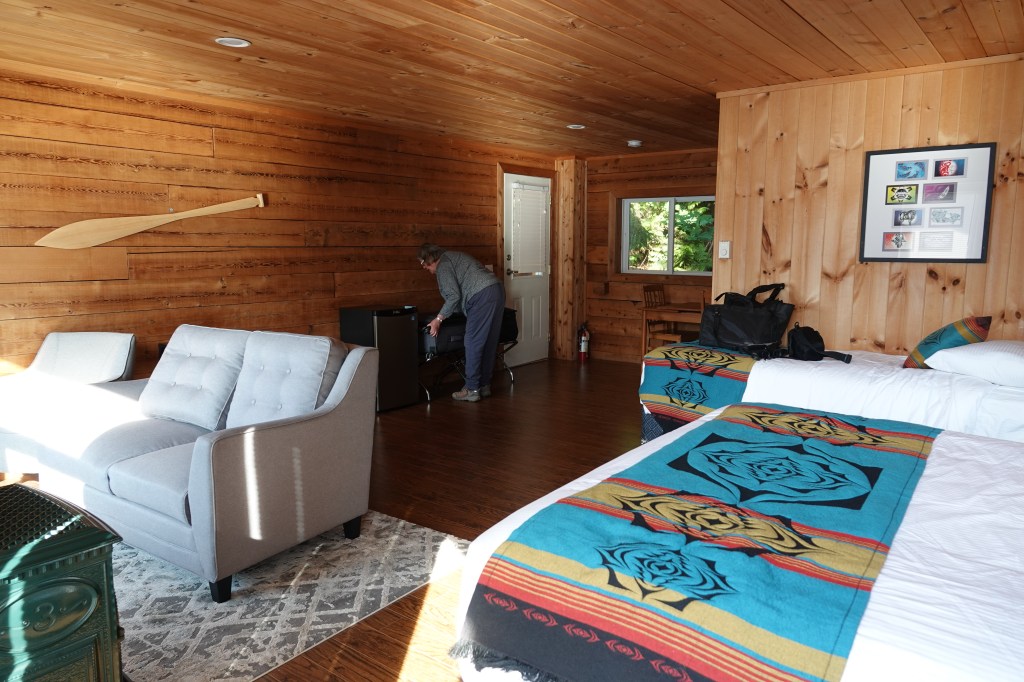
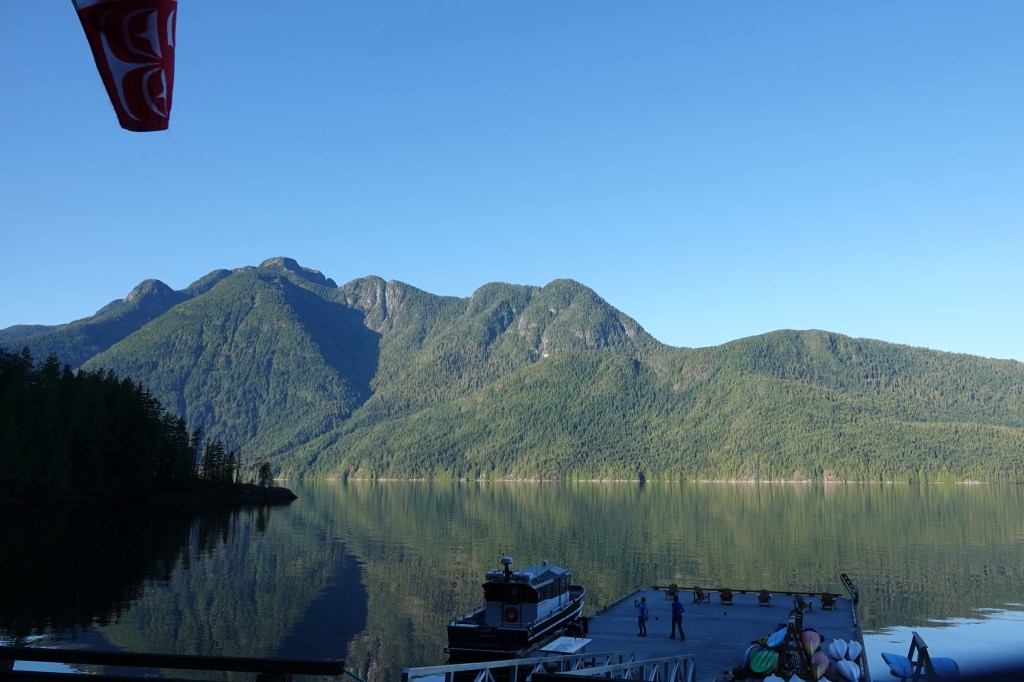
Landing at their spanking new dock, we soon settled into our room that had a spectacular view across Homfray Channel to East Redonda Island and Mount Addenbroke.
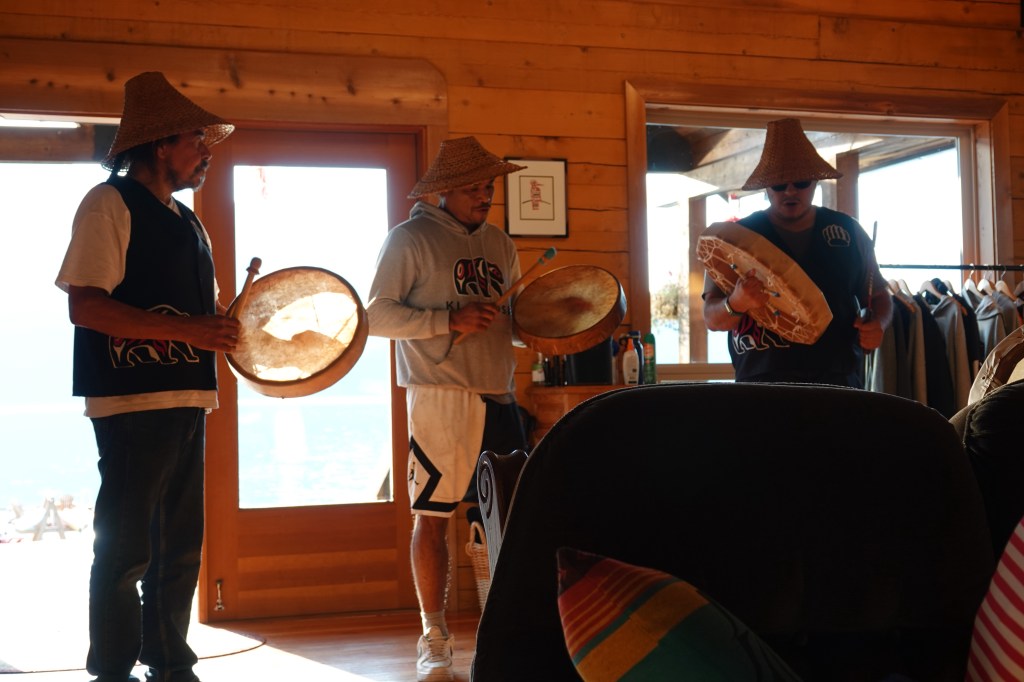
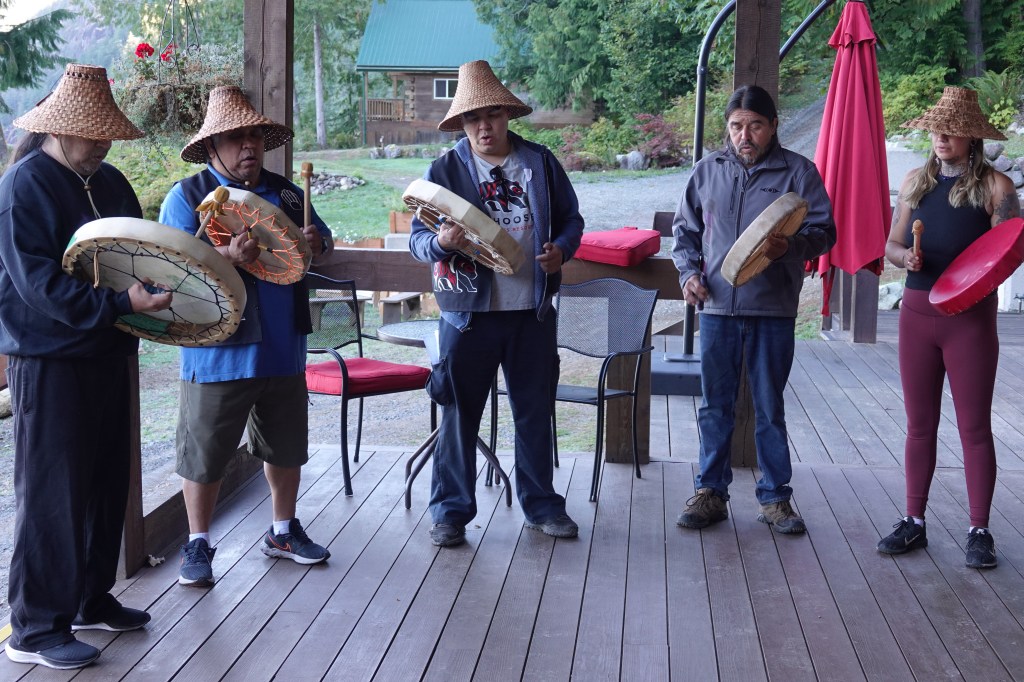
We were formally welcomed by the staff with a traditional welcome song.

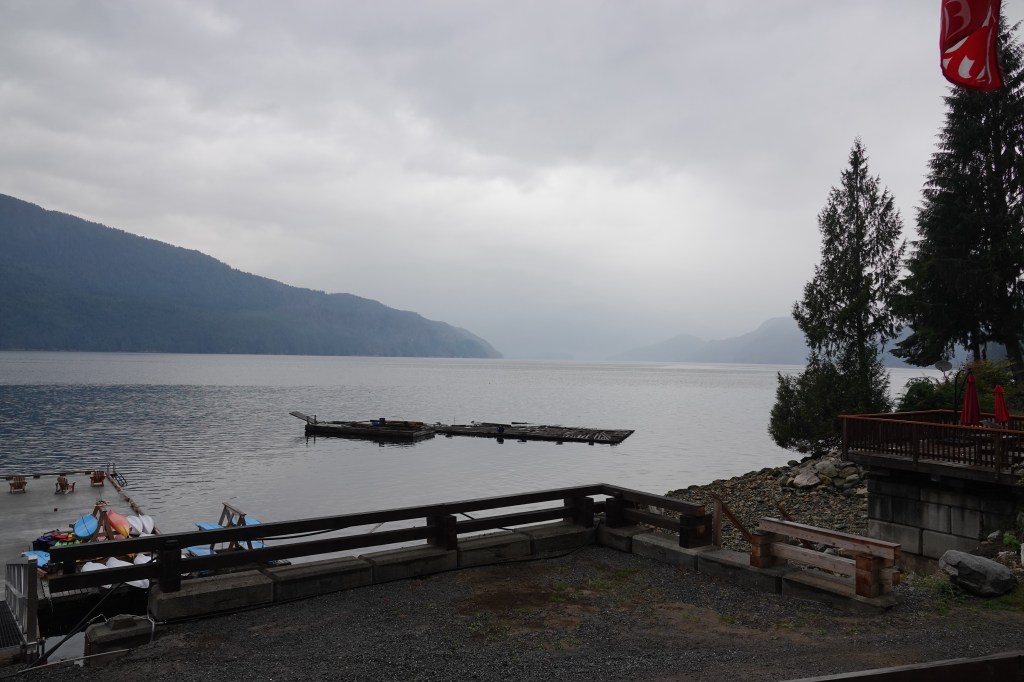
Next morning, after a relaxed breakfast, we were off to the head of Toba Inlet for our first try to see some grizzly bears. Not too much coffee with breakfast though, and no snacks secreted away in pockets or packs. Once up with the grizzlies no pee breaks allowed, and no food scents that might attract the bears.
After days of non-stop sunshine, our first morning started dull and overcast, but spirits and hopes were high.

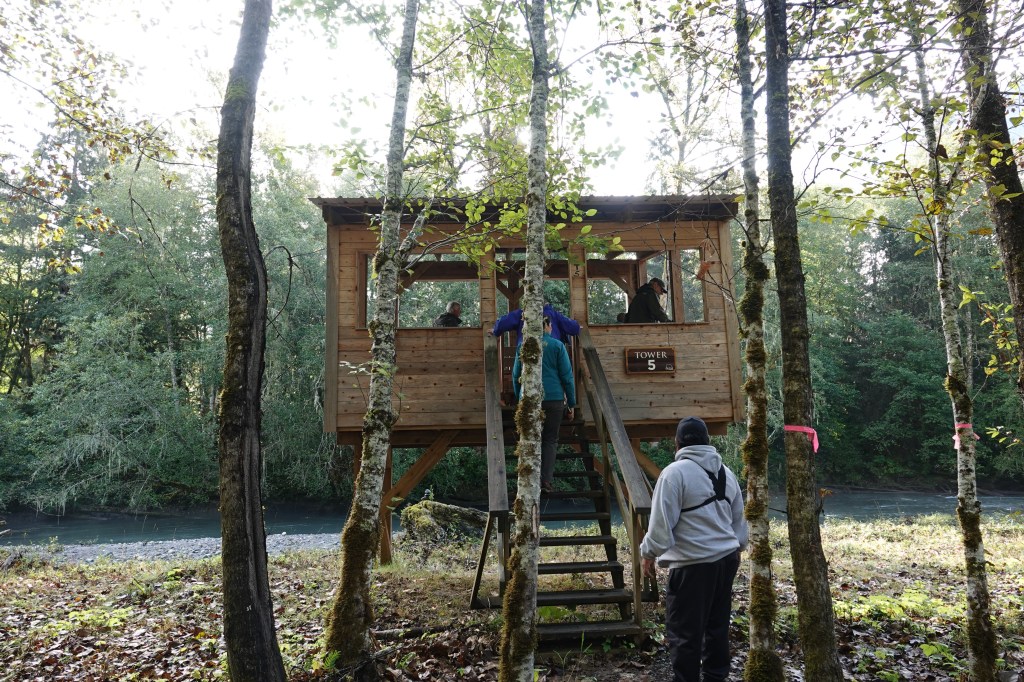
After arriving at the head of the inlet, we disembarked and took a short bus ride over gravel roads to one of a number of purpose-built viewing platforms on the Klite River, a tributary of the main Toba River. The set up for viewing the bears was quite simple. The platforms, set back among the trees, overlooked the river where the bears were feeding on the spawning salmon. We had to be absolutely quiet to not spook the bears, enter the covered viewing platform from the rear, and then wait for the action.
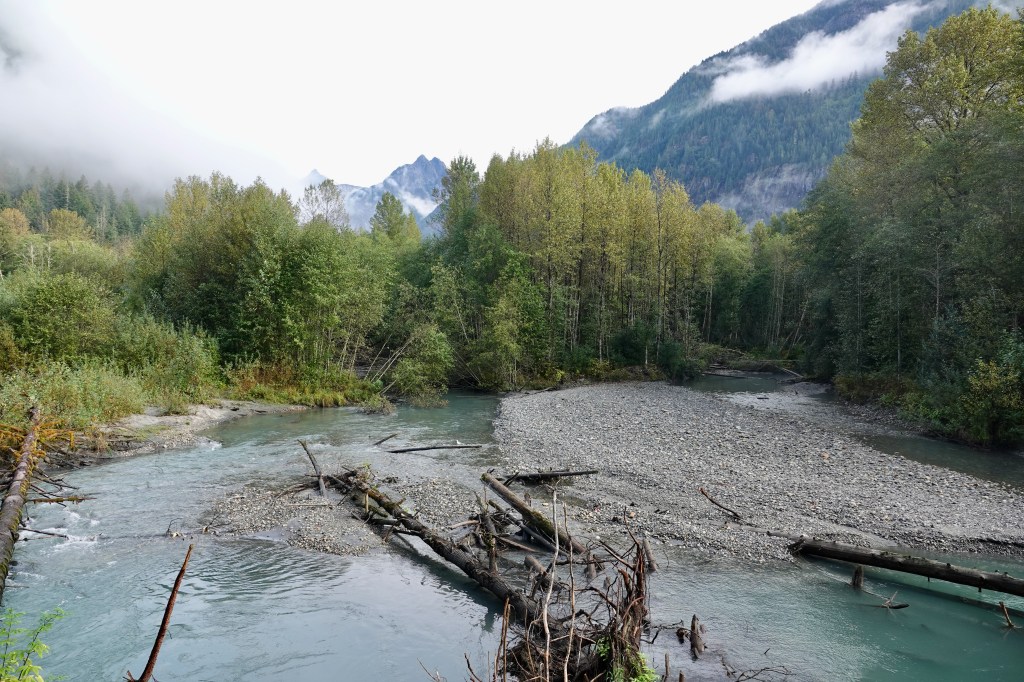
And for the action, we didn’t have to wait at all.

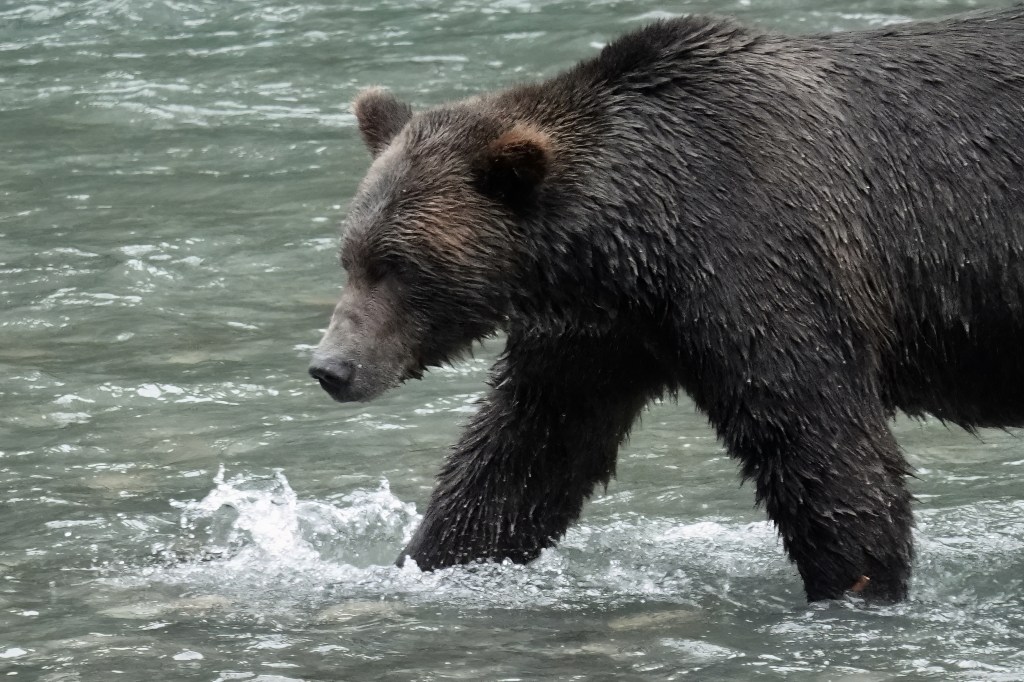
Chum salmon were spawning in the river. In the shallows were many spent, dead and dying fish. More lively fish were in the faster riffles digging redds, and fertilizing eggs with milt from the male fish. The fertilized eggs are buried into the freshly cleaned gravel beds completing the the salmon’s life cycle, and offering up the next generation to the hazards of weather, climate, disease, and predators. It may be a short life for a young salmon, but some will complete their ocean voyage into the North Pacific to return as adults to their natal stream.


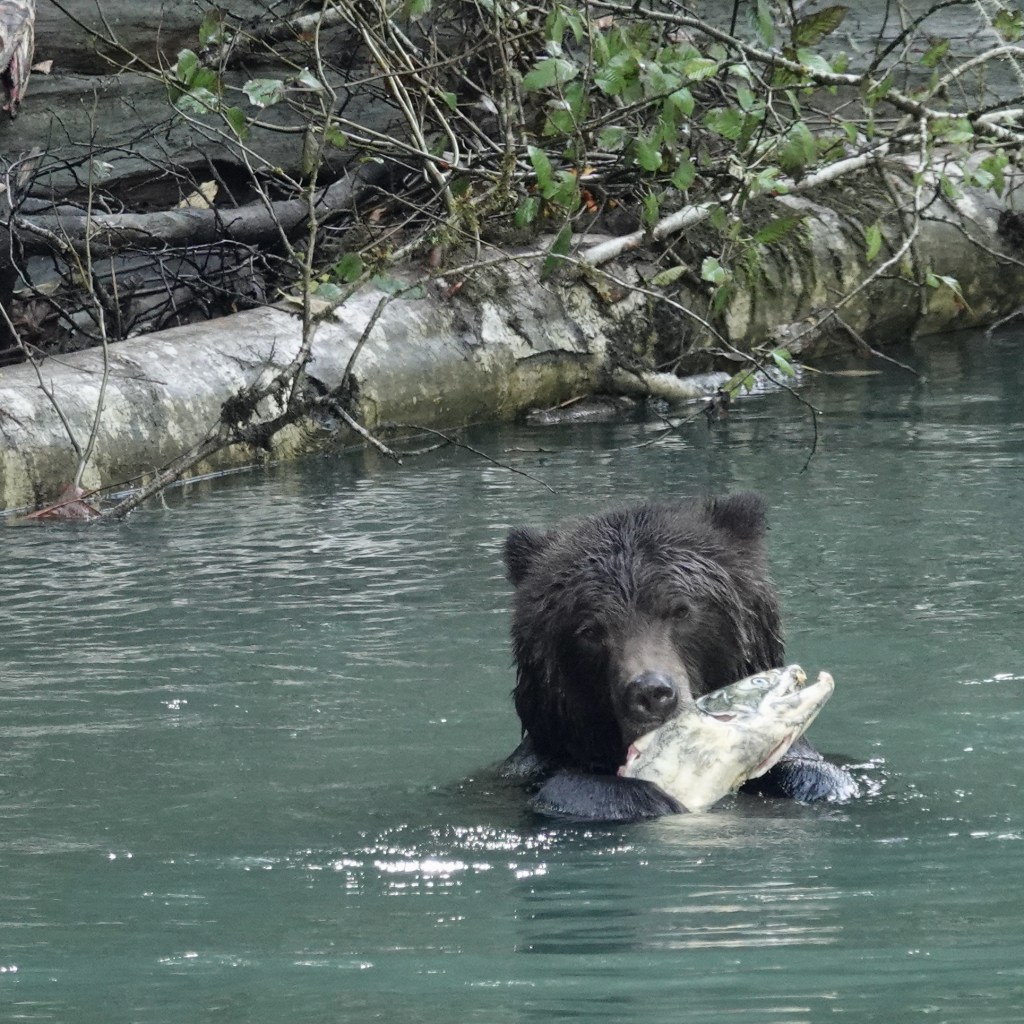
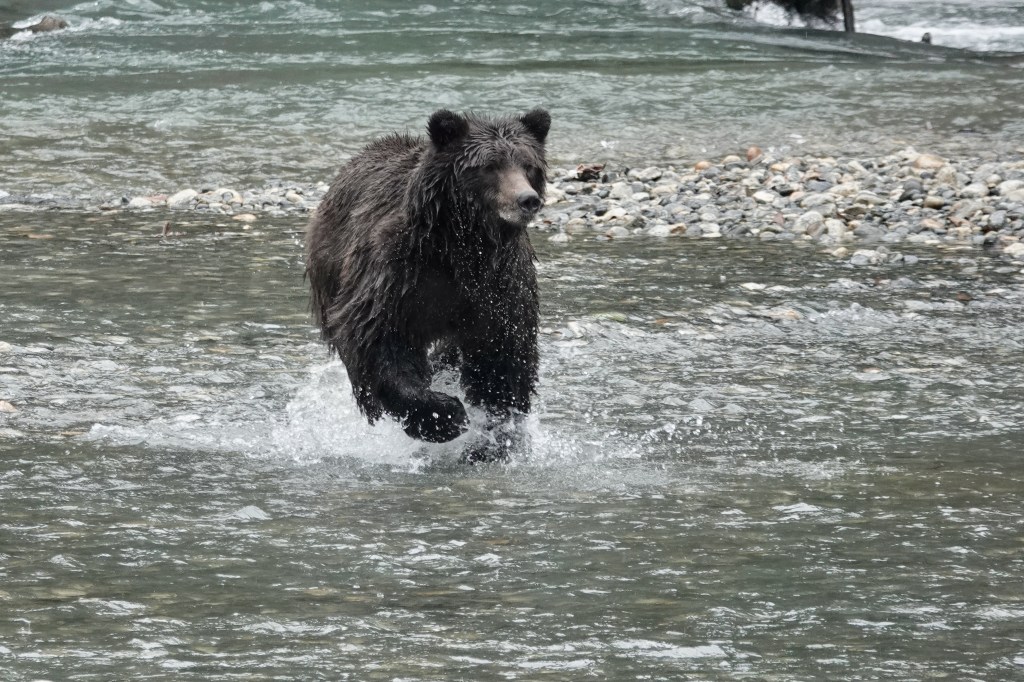
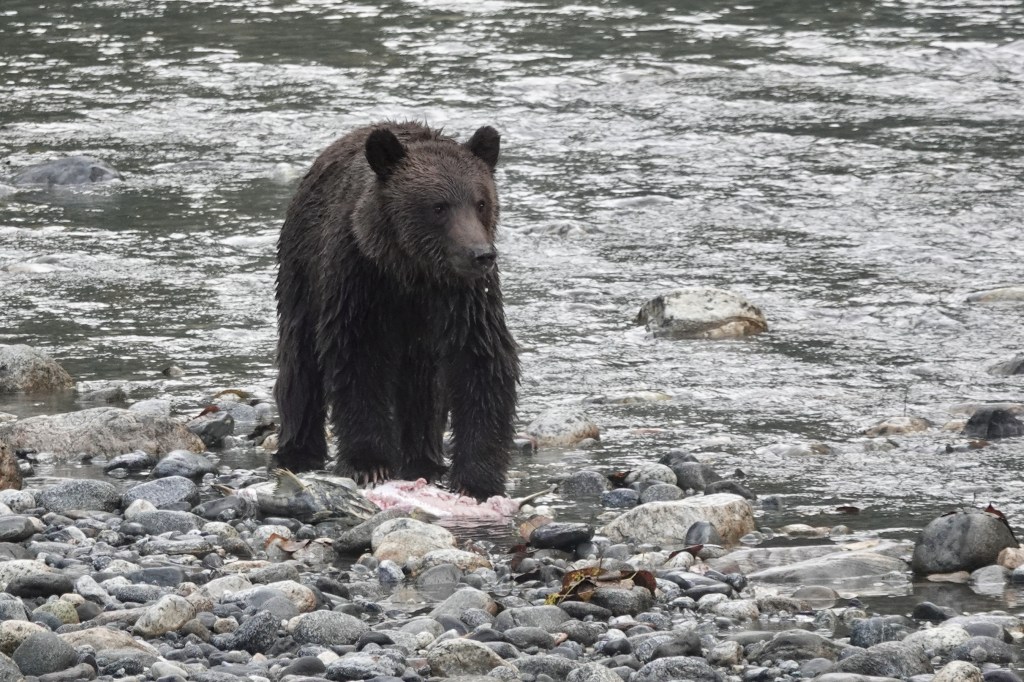
The bears would mostly take dead or almost dead fish that had finished spawning. They ate them on the gravel river banks, in shallow water, or almost completely immersed in the deeper waters. At other times, a vigorous pursuit of a surging salmon took place.


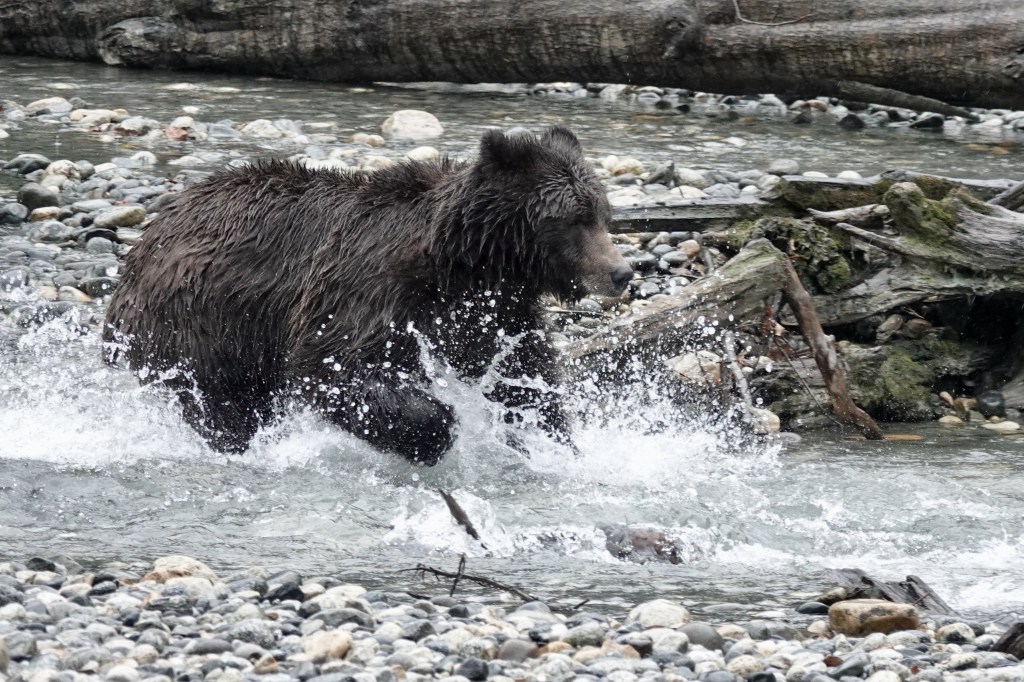
Once a salmon was captured, the first job was usually to rip off and eat the highly nutritious, fat-rich skin – high calorie stuff needed to bulk up for winter hibernation.
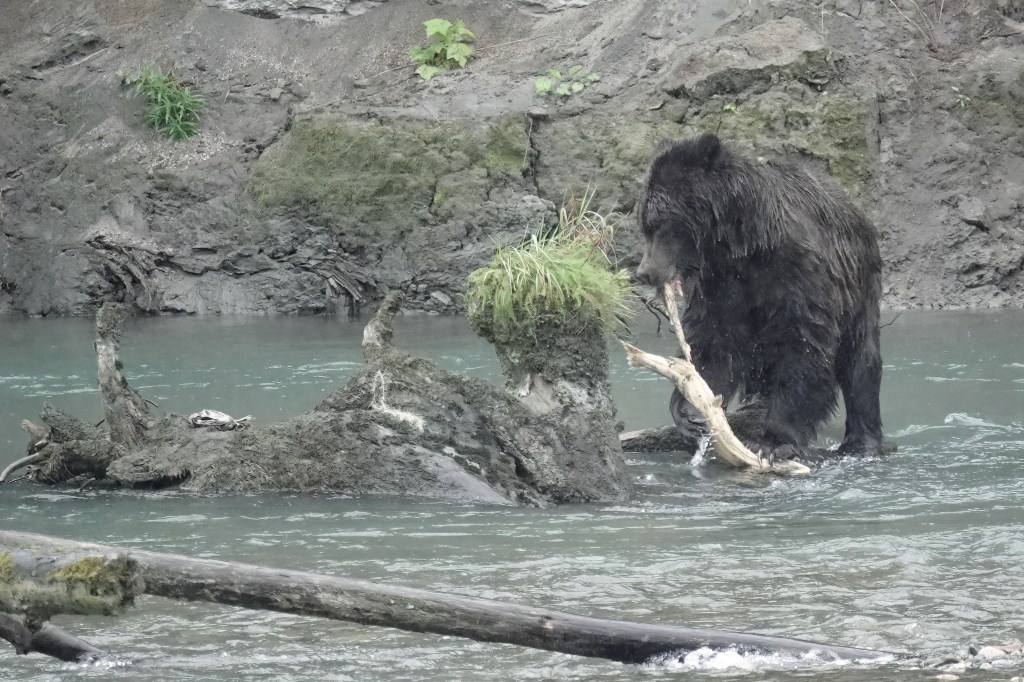
Many times we watched a bear eat a salmon skin, then take a desultory bite of two of the salmon flesh, then just abandon the carcass to look for another fish.
All those discarded fish are not wasted. They decay and provide important nutrients to the river. This natural river fertilization supports a rich flourishing of invertebrates for the young salmon when they hatch from their eggs.
Of all the five species of Pacific salmon, chum fry spend the shortest time in the river after hatching and before moving out to the ocean. They then undertake a huge migration through the North Pacific during which they feed on the ocean’s riches, and grow into full-sized adults. In 3 to 6 years their life cycle is completed when they return to their birth streams. Pacific salmon die after spawning.
I think we all know what bears do in the woods, yes? Well those deposits, plus the many salmon carcasses dragged into the riparian forests, also have a vital ecological role. The forests immediately surrounding salmon streams with a bear population are richer, grow much larger trees, and support a much enriched and biodiverse group of animals, birds, plants and other critters.
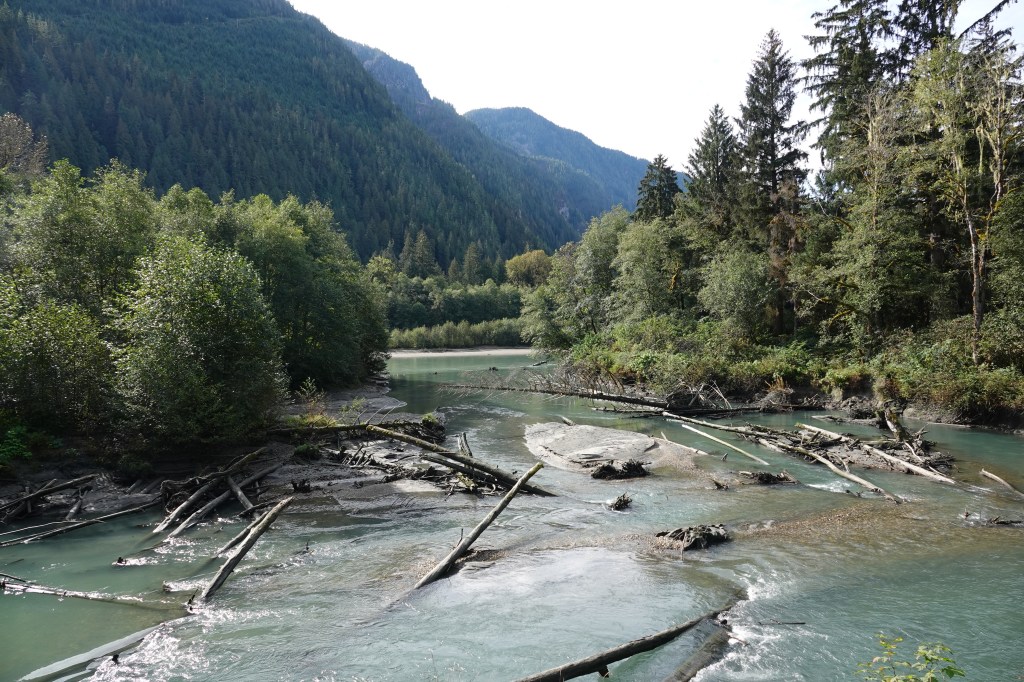
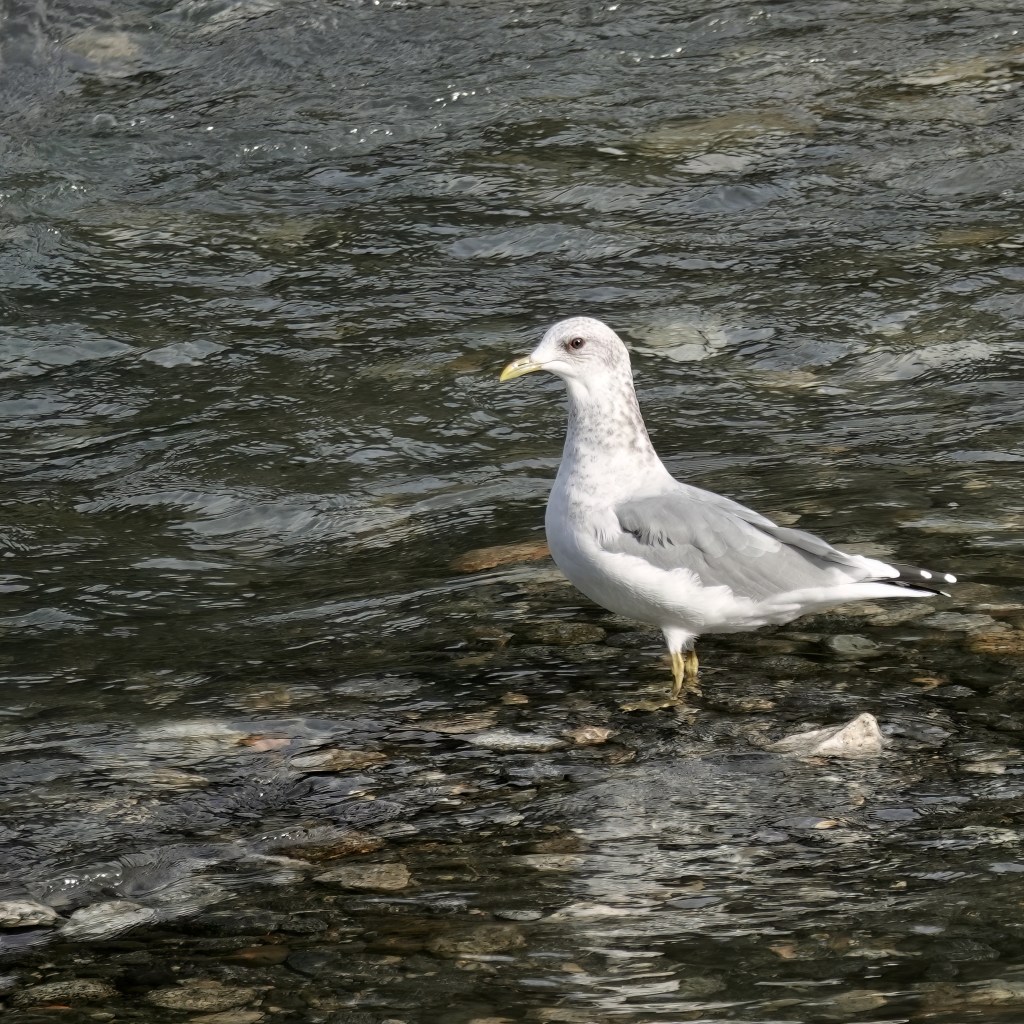
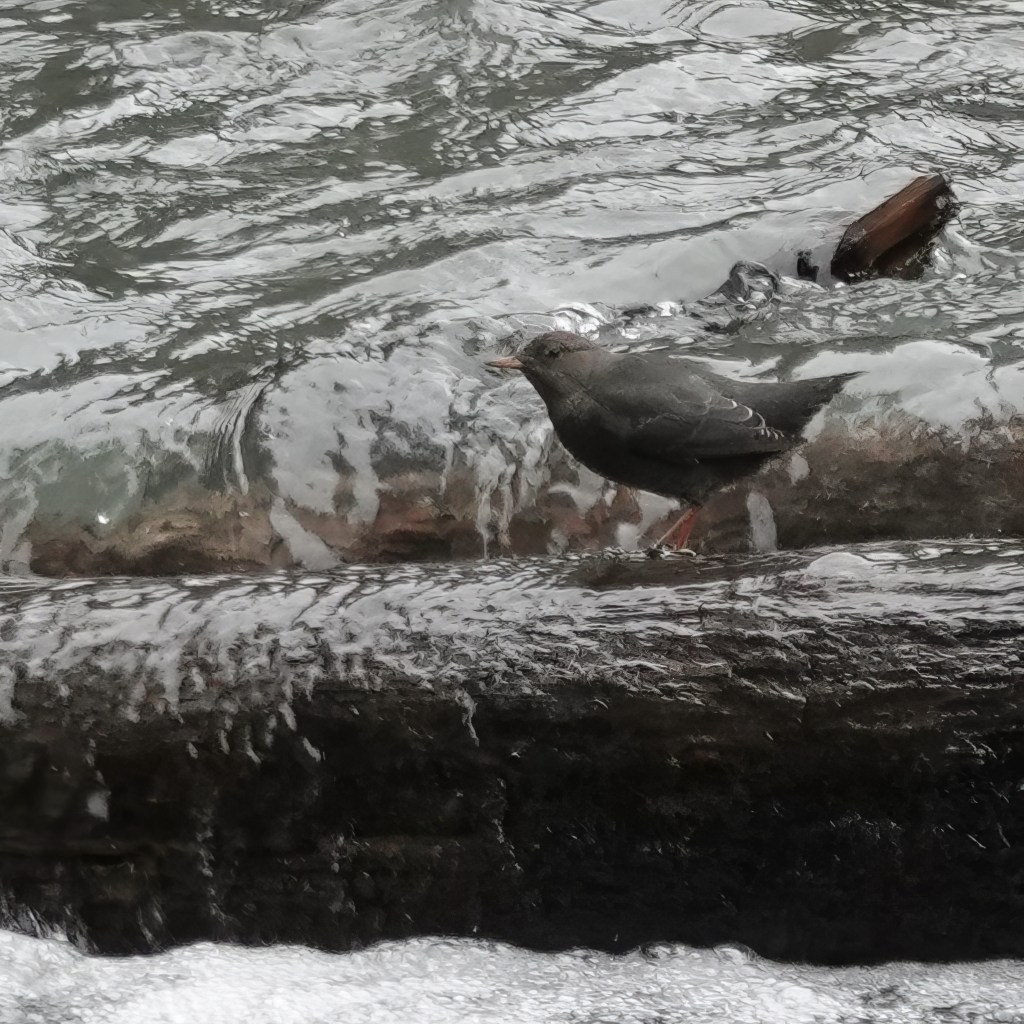
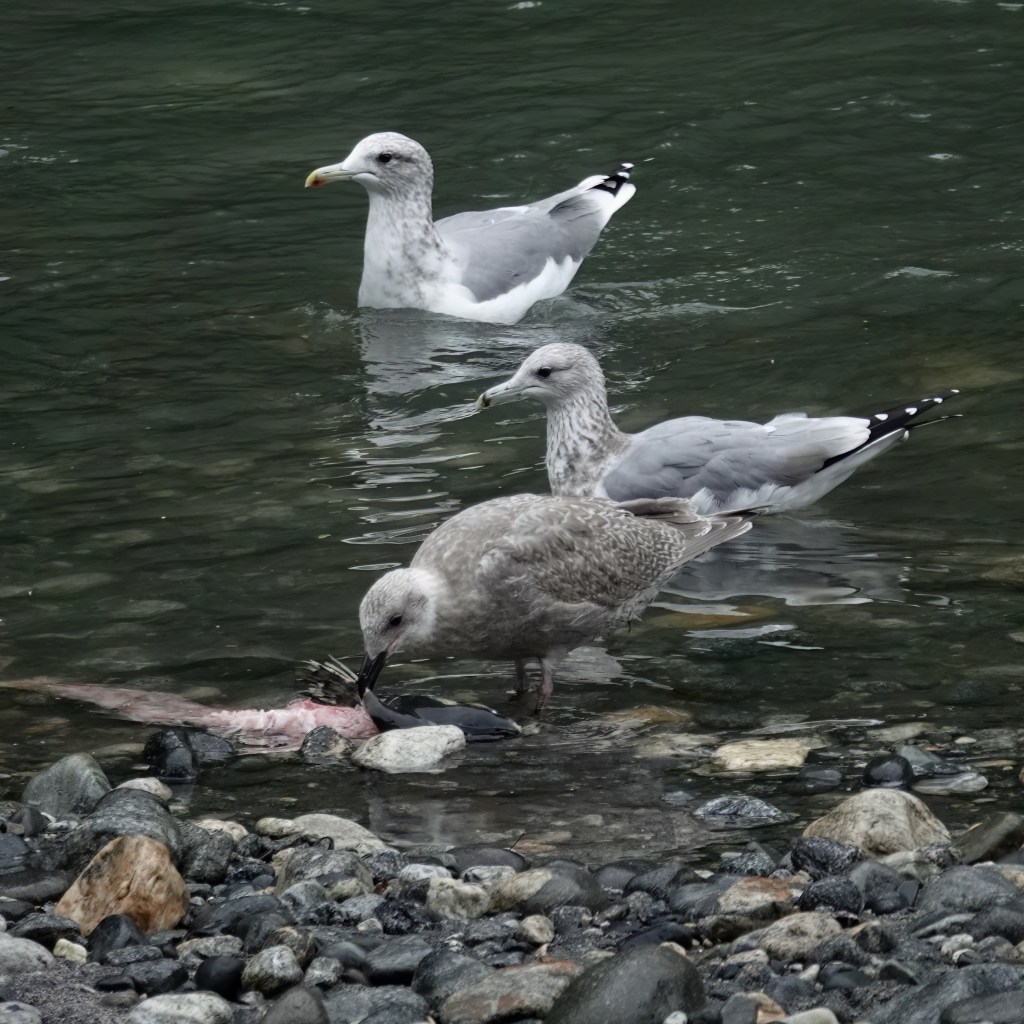
The spawning salmon also provide food for a whole range of other animals and birds. Not surprisingly we saw the birds, but other likely mammals here such as mink, weasels, and river otters we didn’t encounter during our relatively short time on the Klite.

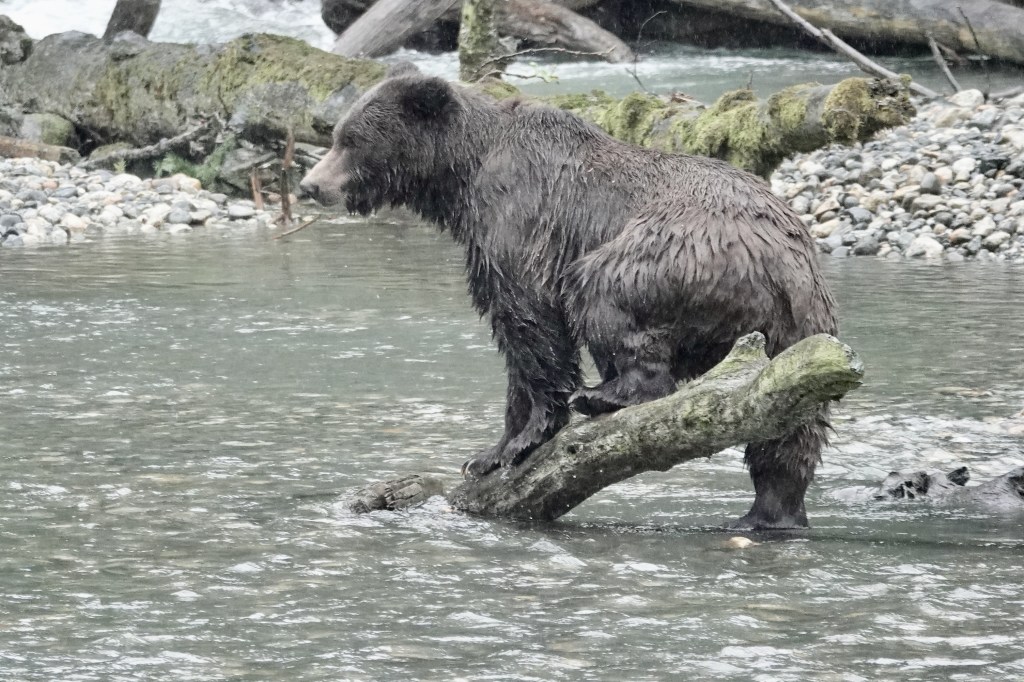
Our time wasn’t all spent just watching the bears eating salmon in the river. Sometimes the bears would provide some light entertainment with their river antics.
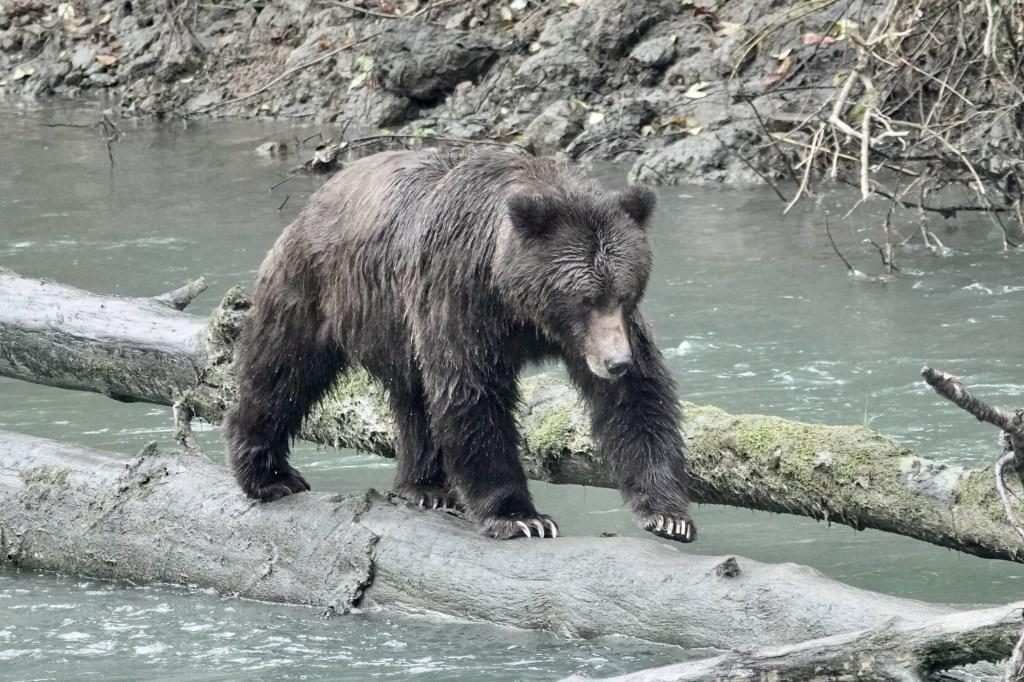
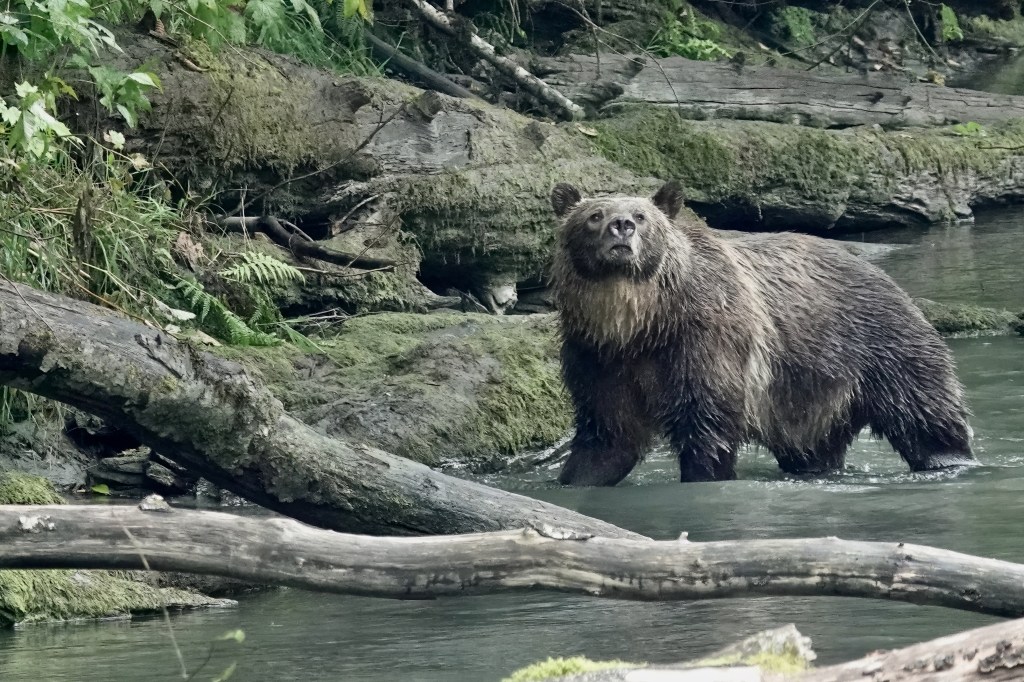
Although the bears seemed mostly unconcerned with our presence, there is no doubt that they were fully aware of us, and occasionally did react to our presence. Their eyesight is reportedly not good, but their hearing and sense of smell are both acute.
The large boar grizzly pictured below was a long way down the river from us and wading through the shallows when he suddenly lifted his head and looked straight at us. You can see from his flared nostrils that he’d picked up our scent.
On our second day with the bears we moved between two adjacent viewing platforms in order see a mother with cubs. We had to be absolutely silent, and walk up onto the platform without making a sound. I thought we did pretty well, but mama bear’s acute hearing, and maybe her sense of smell too, picked us up almost immediately. She left the river quickly, one cub followed, but the second seemed determined to stay and finish breakfast.
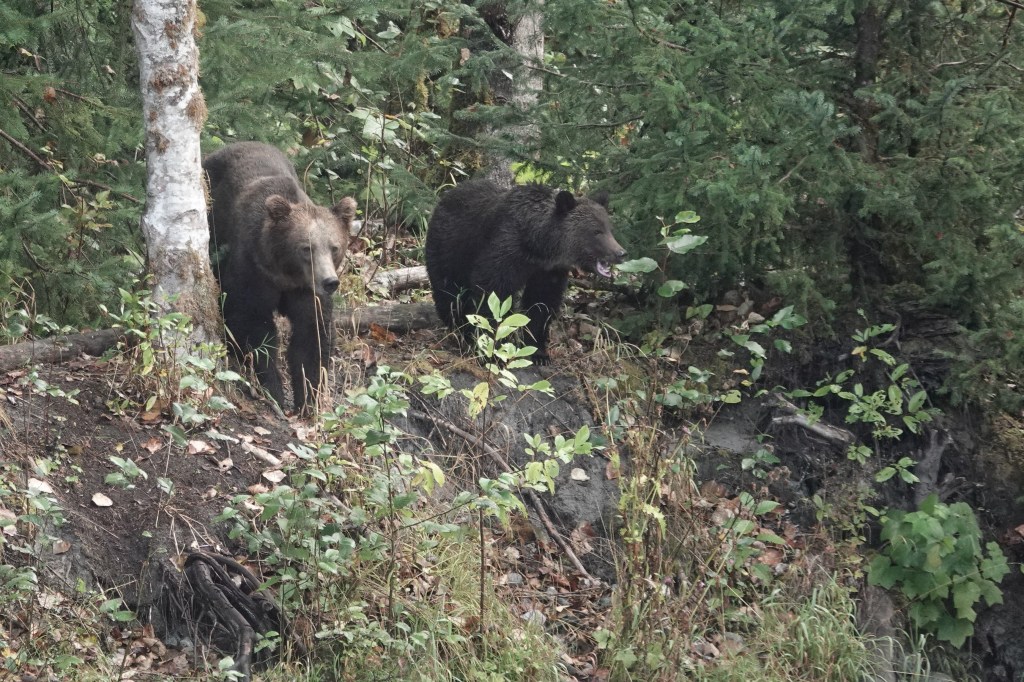
Finally, the reluctant cub seemed resigned to mum’s and its sibling’s urgings. Appearing to be very reluctant, it finally followed them away from the river and into the forest. We never saw the threesome again.
It was marvellous being so close to the bears, and at the same time feeling quite safe up on our viewing platform. And for the most part, except for the mother with cubs, they mostly carried on doing what bears like to do when the salmon are running.
However, the young female featured in many of these pictures decided at one point to switch from salmon to “salad”. She sauntered out of the river, walked up the bank, and headed directly towards us virtually brushing the legs of our viewing platform. Up above the bear our group was excited, and quite hushed!
“How close were the grizzlies?” I’ve been been asked a few times since our return. Well, as close as about 15 feet! Fortunately, when the bear continued around the back of the platform, she didn’t make a move to climb up our stairs, phew! and started snuffling, and scuffing into the duff of the forest floor.

I was unable to see exactly what she was eating. I suspected fungi of some sort because she would snuffle quite deeply into the forest duff, but I never saw any evidence of this. She wasn’t eating leafy vegetation, so my best guess was roots of some kind.
About 45 minutes later she had moved far enough away that we were able to leave our hide, but not before another group of visitors were trapped in their bus while waiting for her to move on. She gave the other bus a good sniffing over, but didn’t didn’t seem to detect anything of interest.
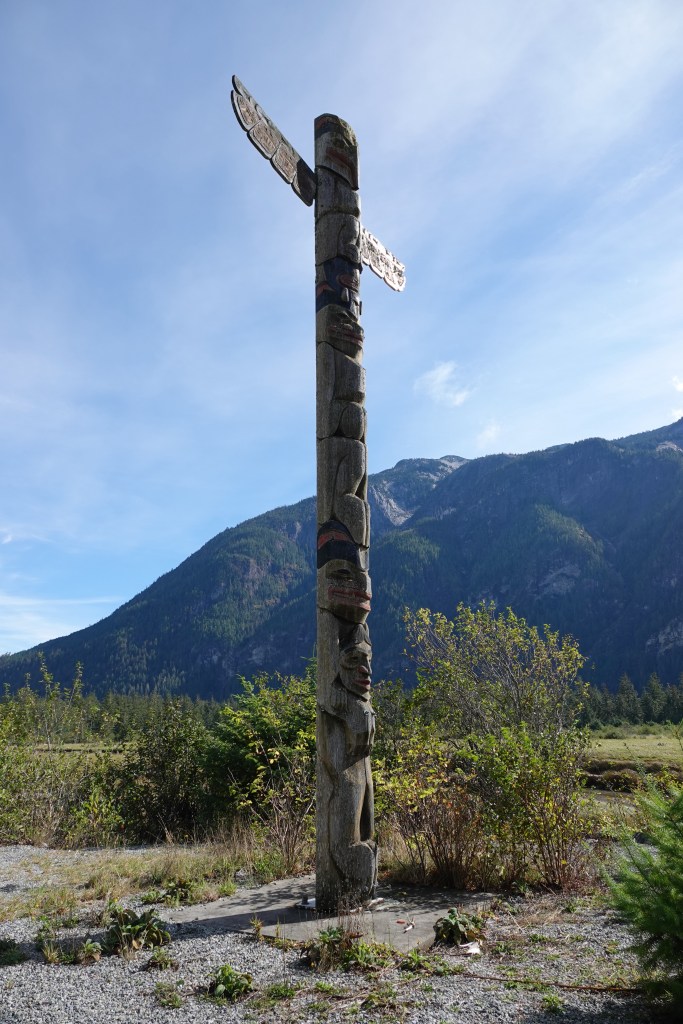
It was time for us to leave the grizzlies and make our way back to the boat. We took in views of the Toba estuary, and were shown a totem pole, carved in Squamish, commemorating eight First Nations workers who died while installing a nearby transmission line.
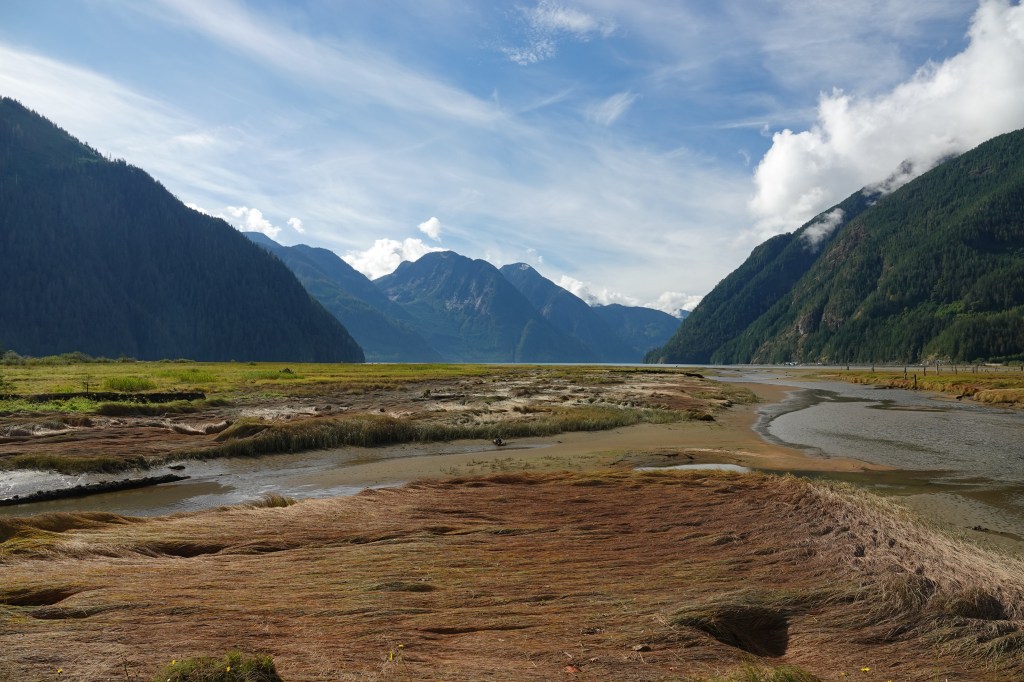

Although we had left the Klite River bears behind, our wildlife viewing had not ended. On our way back to the lodge in Goat 1 we took a brief pause at the mouth of the Brem River.
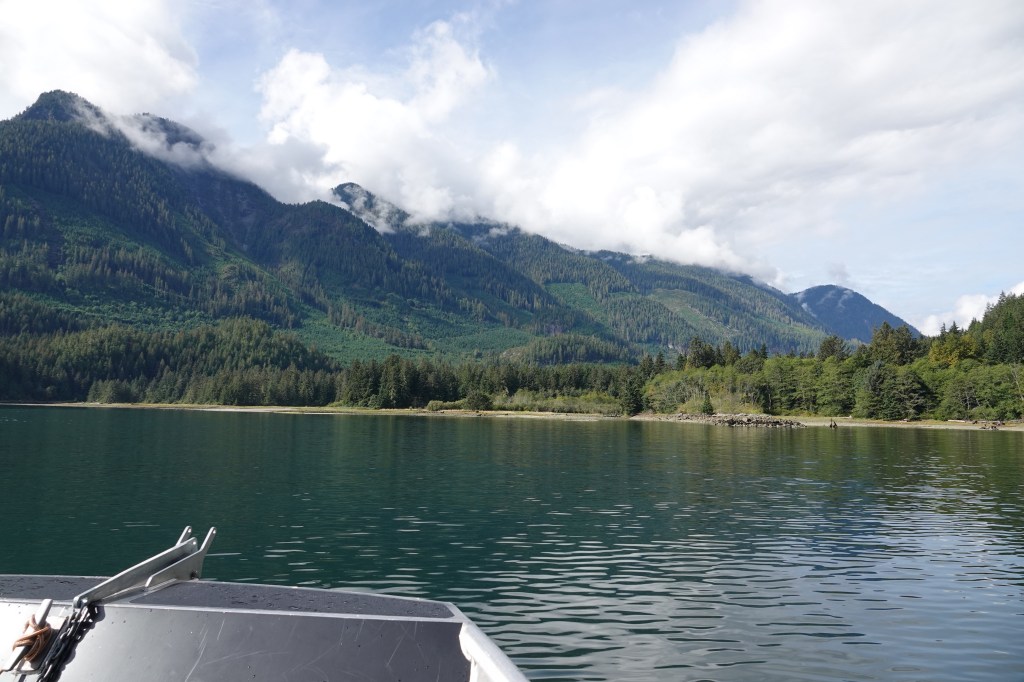
The Brem river valley is important to the Klahoose. In historical times they had permanent village settlements here. However, there were too many avalanches and landslides and the members were permanently relocated to Cortes Island. The Brem is however, still Klahoose territory.
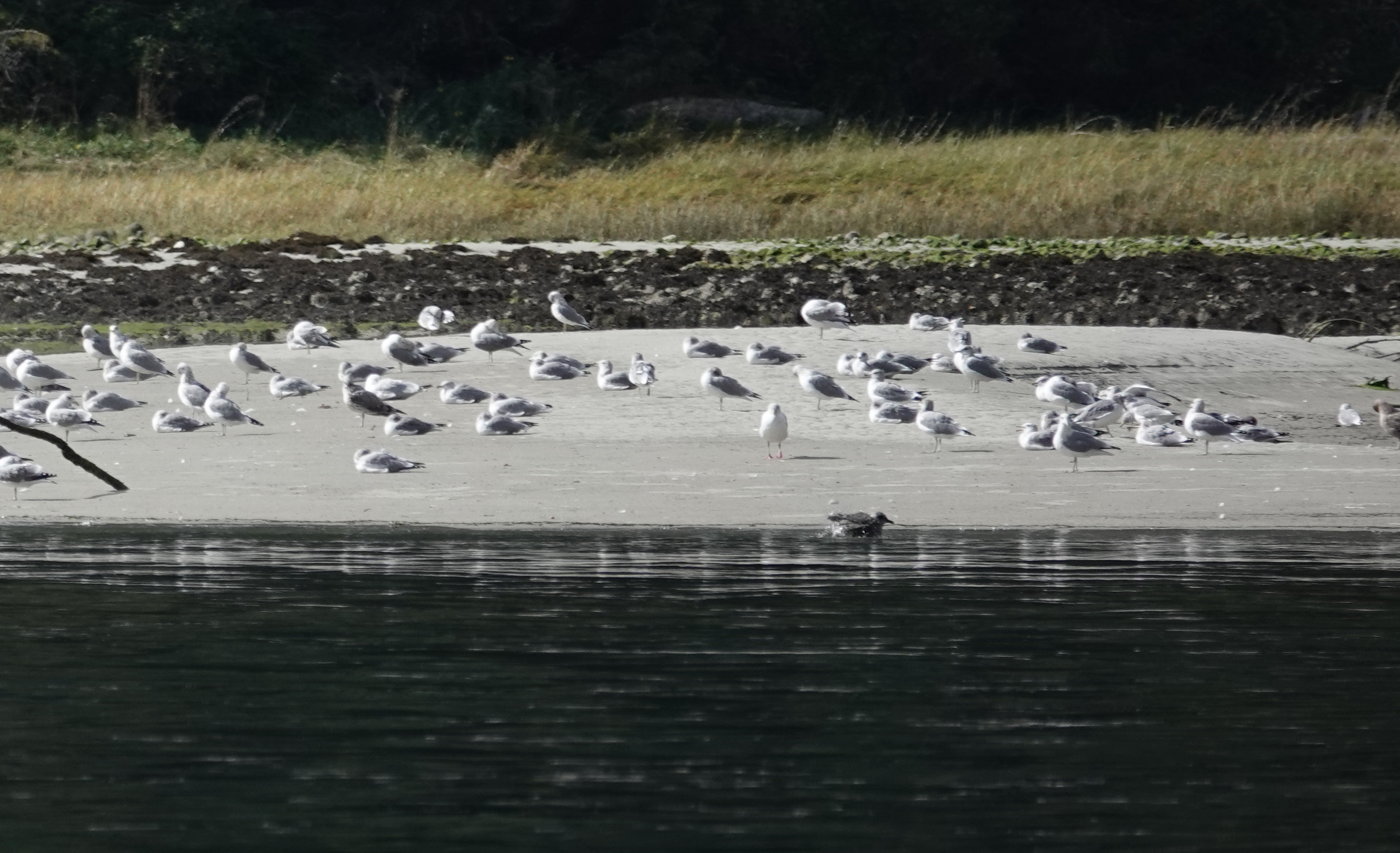
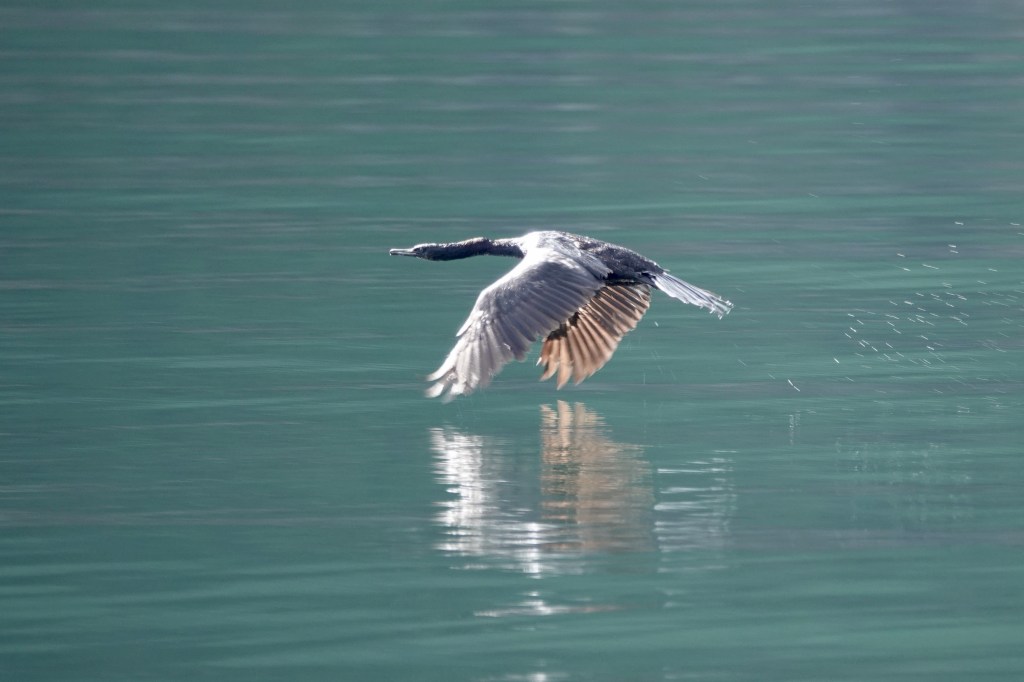
The Brem was the birdiest location we stopped at. A large gull roost of mainly California Gulls was on one of the sandbars, and loons, grebes and cormorants were also present. On shore we saw a sow grizzly and two large cubs. Needless to say, we didn’t attempt a landing. This sighting made day 2 an eight grizzly day.
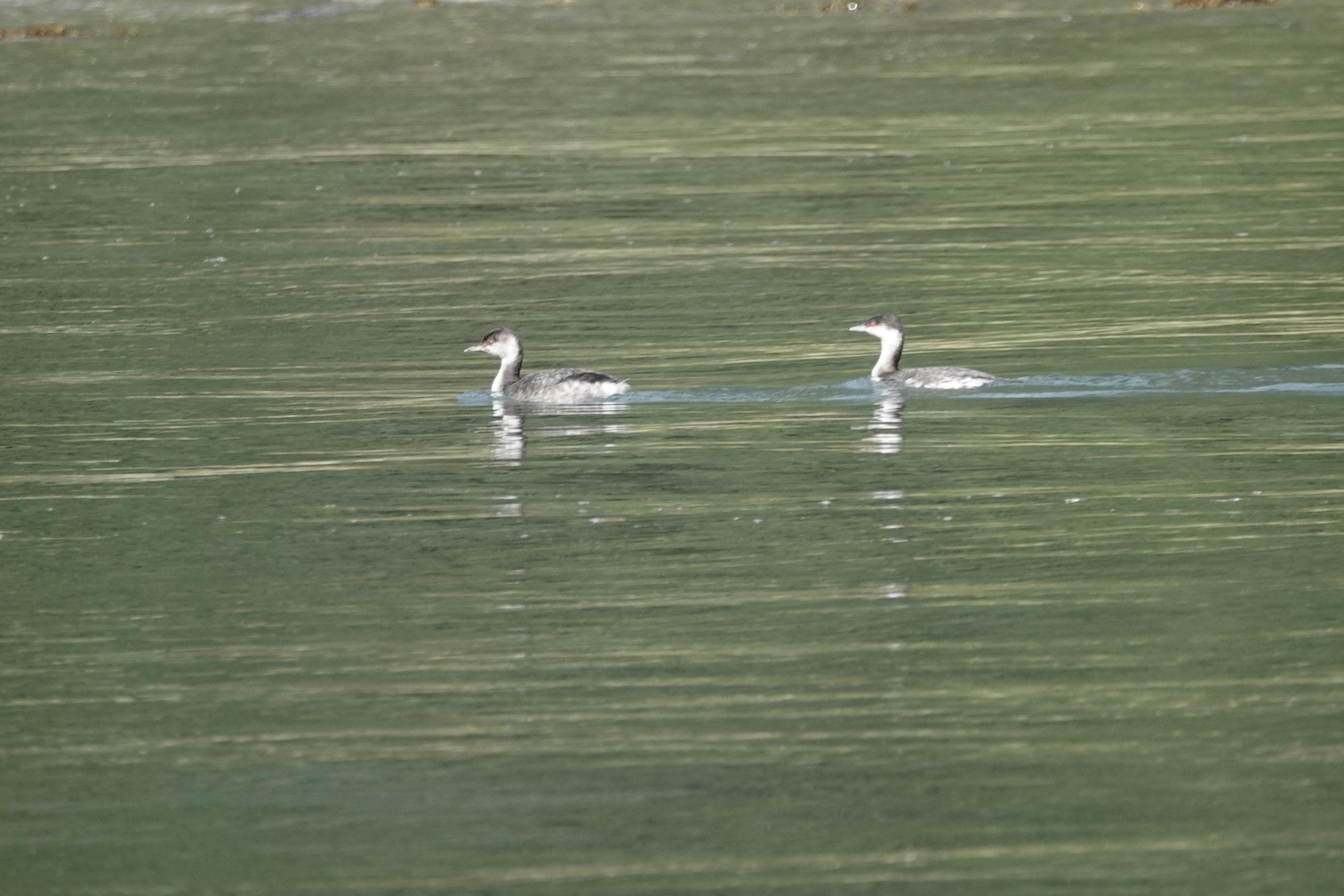
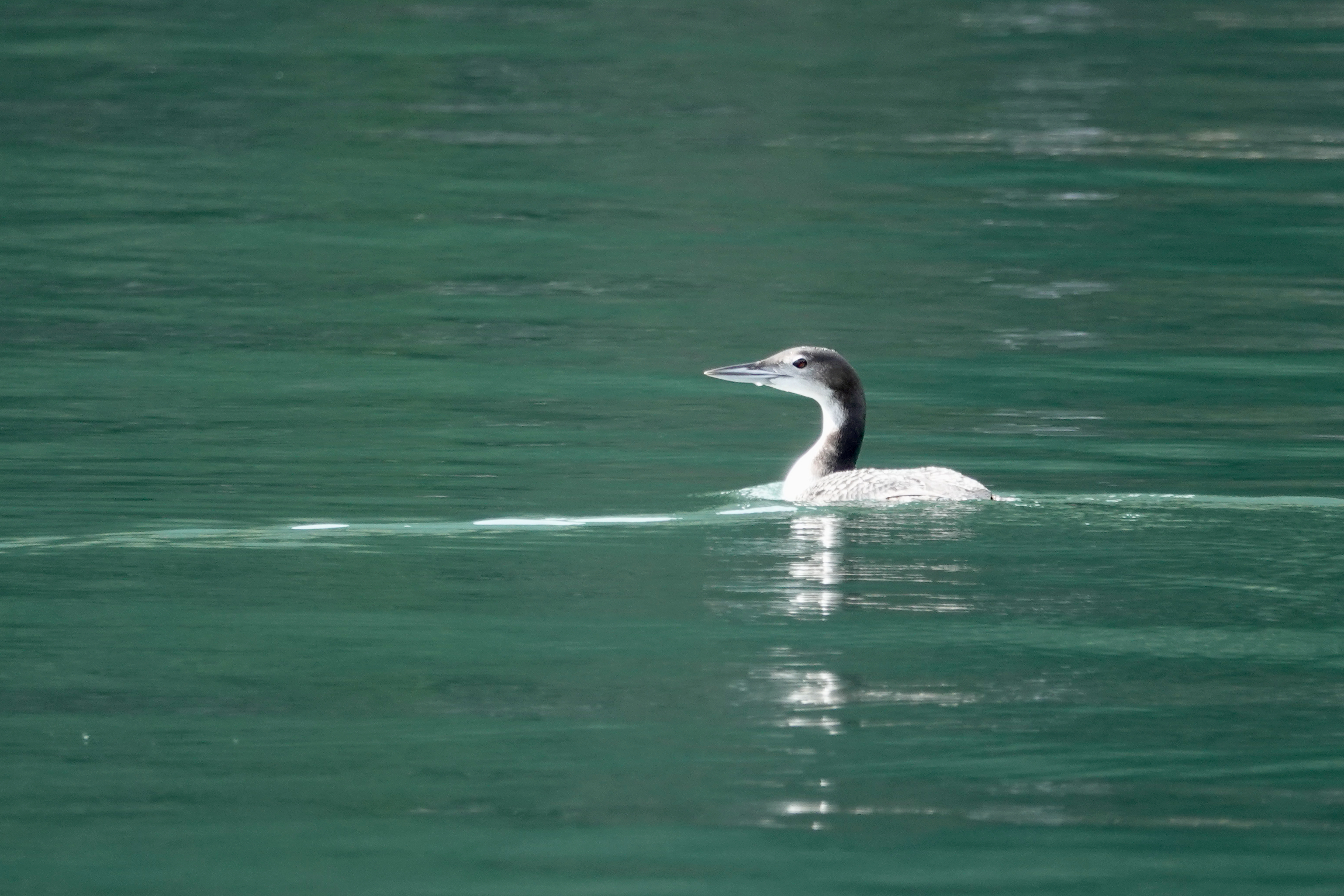
Birds and bears were fulfilling the wildlife theme of our trip, but what we couldn’t know is that the really big “guys” were next up.

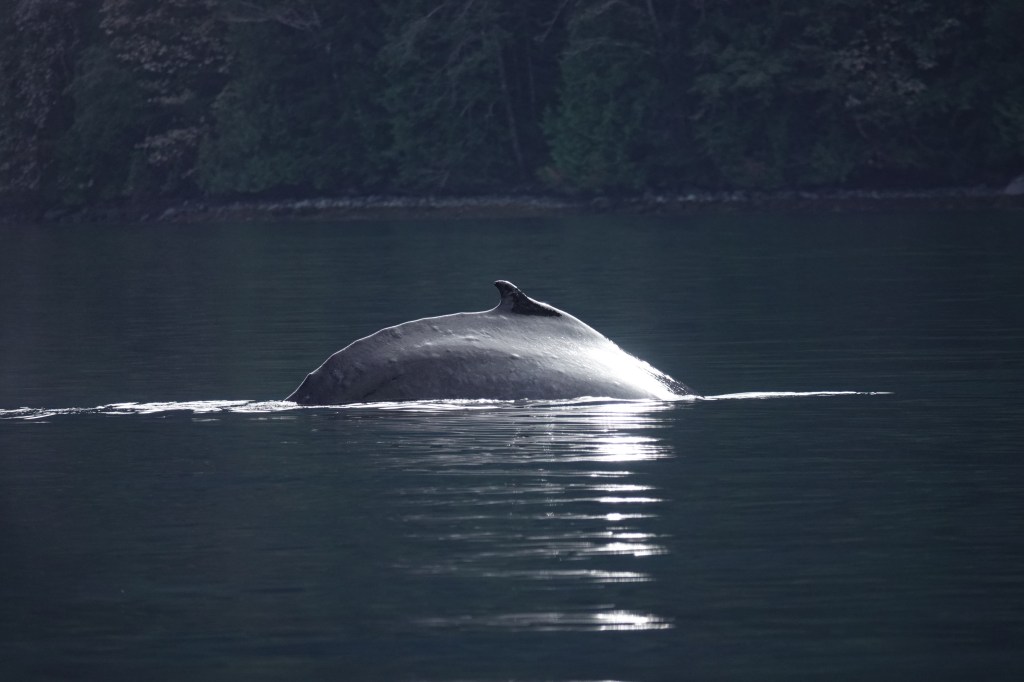
Humpback whales were once common along the British Columbia coast but were extirpated here by whaling along with many other species of large cetaceans. The last whaling station on the coast closed its operations only in 1967. In BC waters six stations operated at various times between 1905 and 1967 killing thousands of whales.
However, with whaling ended, humpbacks, at least, are making a comeback. Over the last couple of decades they have become widely seen, and like this pair are reoccupying many of the areas where they were previously found.

Our time at Klahoose was ending, and our final view of East Redonda was spectacular in the morning sun.
All that was left to do was pack up, eat our breakfast and be bid farewell by our wonderful First Nation’s hosts before boarding Goat 1 and heading off for Lund and our journey home.
For a trip like this one there will always be fantastic memories: the place, the people and, of course, the bears.

 Beyond Burnaby